What Is LVT Flooring? The Complete Guide to Luxury Vinyl Tile
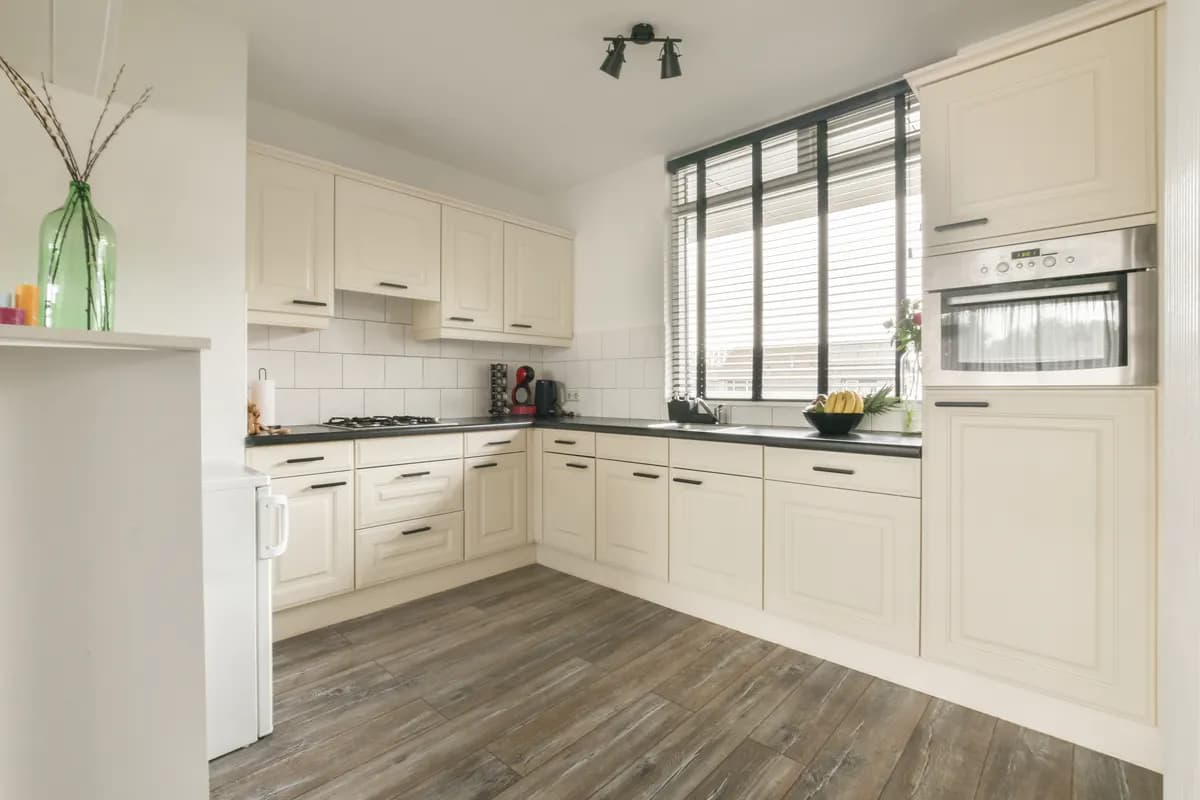
LVT stands for Luxury Vinyl Tile — a multi-layer vinyl flooring that convincingly mimics wood planks or stone tiles while being fully waterproof and extremely hard-wearing. Here is what LVT is made of, how it differs from laminate and sheet vinyl, and where it works best.
LVT in One Paragraph
LVT stands for Luxury Vinyl Tile. It is a rigid or flexible vinyl flooring made in individual planks or tiles rather than one big sheet, built up from multiple layers: a tough transparent wear layer on top, a high-definition printed design layer beneath it, a solid vinyl core, and a backing layer. The result is a floor that convincingly looks like oak planks, herringbone parquet, slate, or marble — but is 100% waterproof, warm underfoot, quiet, and far harder to scratch or dent than the natural materials it imitates. You will also see the terms LVP (Luxury Vinyl Plank — simply LVT in a plank shape), SPC (Stone Plastic Composite — a rigid-core variant), and click vinyl (LVT that locks together like laminate). They are all members of the same family, and in this guide LVT covers all of them unless stated otherwise.
What LVT Is Made Of, Layer by Layer
From the top down: the wear layer is a transparent polyurethane-coated shield, measured in fractions of a millimetre — 0.3mm suits bedrooms, 0.55mm is the standard for busy family homes and most kitchens, and 0.7mm is commercial grade. The thicker this layer, the longer the floor keeps looking new; it is the single most important number on any LVT specification sheet. Beneath it sits the design layer, a high-resolution print of wood grain or stone, often embossed so the texture follows the grain you can see. The core gives the plank its body: flexible vinyl in traditional glue-down LVT, or a rigid stone-polymer composite in SPC, which adds dent resistance and dimensional stability. The backing layer stabilises the plank and, on many click products, includes a built-in acoustic underlay. Quality differences between budget and premium LVT live mostly in the wear layer thickness, the realism of the print, and the precision of the locking joints.
LVT vs Laminate vs Sheet Vinyl
The three get confused constantly, so here is the honest comparison. LVT vs laminate: laminate has a wood-fibre core that swells if water sits in the joints; LVT is vinyl through and through, so it is genuinely waterproof — the deciding factor for kitchens and bathrooms. Laminate typically costs less and feels more rigid underfoot; LVT is quieter, warmer, and softer. For bedrooms and lounges either works, and we covered that battle in detail in our LVT vs laminate guide. LVT vs sheet vinyl: sheet vinyl is one continuous waterproof piece — the most affordable waterproof floor and ideal for bathrooms — but it cannot match the realism, plank-by-plank texture, or repairability of LVT, where a single damaged plank can be replaced. Think of it as three rungs on a ladder: sheet vinyl for value, laminate for dry-room looks on a budget, LVT as the premium all-rounder that handles every room.
Is LVT Flooring Any Good? The Honest Pros and Cons
The pros are real: fully waterproof, extremely durable (15 to 25 year residential warranties are standard), comfortable and warm underfoot, quiet compared with laminate, compatible with underfloor heating, easy to clean, and available in remarkably realistic wood and stone designs including herringbone. The cons deserve equal honesty: LVT costs more than laminate or sheet vinyl for an equivalent look; it is not invincible — heavy furniture dragged across it can scratch the wear layer, and cheap LVT with a thin wear layer dulls in traffic lanes within a few years; it needs a flat, well-prepared subfloor, because every bump beneath eventually shows on the surface; and while the best prints fool most people at eye level, a floor-level inspection reveals it is not real wood. Verdict: for kitchens, bathrooms, hallways, and open-plan spaces, LVT is arguably the best all-round flooring currently made. For low-traffic bedrooms, cheaper options serve just as well.
Glue-Down vs Click LVT
LVT installs in two ways, and the choice matters. Glue-down LVT is bonded directly to the subfloor with adhesive. It is the most stable option — nothing moves, joints stay tight for decades, and it is the right choice for kitchens, bathrooms, conservatories with temperature swings, and rooms with underfloor heating. The trade-off is that installation is more demanding and the subfloor must be prepared to a high standard. Click LVT locks together plank to plank and floats over the subfloor like laminate, usually over a thin specialist underlay or with a pre-attached backing. It installs faster, can be walked on immediately, and individual planks are easier to replace. Rigid-core SPC click systems have largely solved the expansion issues older click vinyl suffered in sunny rooms. As a rule: wet rooms and heat sources favour glue-down; living spaces and faster projects favour click. A good fitter will recommend the right system for each room rather than one answer for the whole house.
Where LVT Works Best (and Where to Skip It)
Best rooms for LVT: kitchens — the strongest case of all, where waterproofing, durability, and comfort all matter at once; bathrooms and en-suites, especially glue-down; hallways and entrances, where the scratch-resistant wear layer earns its keep under boots, buggies, and dog claws; open-plan kitchen-diners, where one continuous LVT floor flows through cooking and living zones without thresholds; conservatories and garden rooms, where SPC handles the temperature swings; and utility rooms. Where to think twice: low-traffic spare bedrooms, where laminate or carpet delivers the same effect for less; rooms with severely uneven floors, unless you budget for proper subfloor preparation first; and heritage rooms where the realism of genuine wood matters to you at floor level — engineered wood may serve the brief better. For a typical Liverpool family home, the most popular pattern we fit is LVT through the ground floor with carpet upstairs.
See LVT Properly in Our Liverpool Showroom
Specifications only get you so far — the difference between budget and premium LVT is obvious the moment you see and feel full-size planks rather than photographs. Our Lodge Lane showroom in Liverpool stocks LVT across the full range: wood-effect planks in every shade from pale ash to smoked oak, herringbone formats, stone and slate effects, glue-down and click systems, and rigid-core SPC, including ranges from the leading names. Bring your room dimensions or book our free home measuring service anywhere across Liverpool and Merseyside — we check your subfloor honestly, recommend glue-down or click room by room, and give you a written all-inclusive quote covering preparation, materials, and fitting. Call 0151 709 4943 or visit us six days a week. And if you are weighing LVT against laminate, read our LVT vs laminate guide before you decide.
Explore Our Flooring Services
Everything below is supplied and professionally fitted by our Lodge Lane team, with free home measuring across Liverpool and Merseyside.
Need Help Choosing Your Flooring?
Visit our showroom on Lodge Lane or call for a free, no-obligation quote.
Call 0151 709 4943