
Does Vinyl Flooring Need Underlay? Sheet, Click and Glue-Down Answered
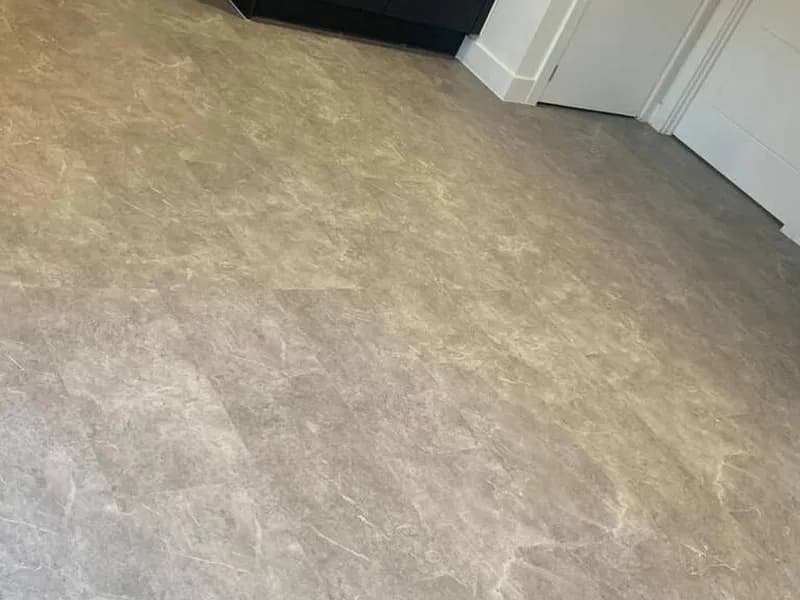
The short answer: usually no. Sheet vinyl and glue-down LVT should never have underlay beneath them, and most click LVT either has underlay built in or needs only a thin specialist layer. Here is the full answer by vinyl type — and the carpet underlay mistake that ruins floors.
The Short Answer
Most vinyl flooring does not need underlay — and putting the wrong underlay beneath vinyl actively damages it. Sheet vinyl: no underlay, ever; it is laid directly onto a smooth, prepared subfloor. Glue-down LVT: no underlay, ever; the planks are bonded straight to the subfloor, and anything between them and it would defeat the adhesive. Click LVT and SPC: it depends on the product — many have an acoustic backing already attached and must not have anything added, while others specify a thin, dense, purpose-made vinyl underlay of around 1 to 1.5mm. The one universal rule: never use carpet underlay, laminate underlay, or any soft foam under any vinyl floor. Vinyl needs a firm base; softness underneath lets the click joints flex and snap and lets furniture legs dent through. What vinyl actually needs beneath it is not cushioning — it is smoothness, and that is a preparation job, not an underlay job.
Why Vinyl Is Different From Laminate and Carpet
The confusion is understandable: laminate needs underlay, carpet needs underlay, so surely vinyl does too. But the reason those floors need underlay does not apply to vinyl. Carpet underlay exists to add springiness and protect fibres from grinding against the floor. Laminate underlay exists to let a rigid floating board move, to dampen the hollow clack of footsteps, and to smooth tiny imperfections. Vinyl is neither springy nor rigid — it is a thin, flexible (or semi-rigid) material that wants continuous, firm support across its entire underside. Give it a soft layer and three things go wrong: click joints hinge on the soft spots until the locking mechanism fatigues and fails; point loads — chair legs, table feet, stiletto heels — press dents that never recover; and the floor develops a vague, spongy feel underfoot that gets worse with time. The firm-base rule is also exactly why subfloor preparation matters so much more for vinyl than for carpet: with no thick underlay to hide sins, the subfloor IS the finish quality.
Click LVT: Built-In Backing vs Separate Underlay
This is the only category where underlay is sometimes correct, so here is how to get it right. Check the product specification first: a large share of modern rigid-core click LVT (most SPC products) comes with a pre-attached backing layer — usually a thin foam or cork-like acoustic layer bonded to the underside. If the backing is attached, the answer is settled: lay it directly on the prepared subfloor and add nothing, because doubling up voids warranties and causes the joint-flex failures described above. If the product has no attached backing, the manufacturer will specify a compatible underlay: thin (around 1 to 1.5mm), high-density, designed for LVT, often with a damp-proof film for concrete subfloors. These specialist underlays add a little acoustic improvement and minor smoothing without the softness that kills click joints. What they are not: a substitute for subfloor preparation. If your floorboards are uneven, no legal thickness of LVT underlay will rescue them — that is a plywood overlay job.
Can You Use Carpet Underlay Under Vinyl? (No — Here Is Why)
It is one of the most-asked flooring questions, usually from someone with a roll of leftover carpet underlay and good intentions: can it go under the new vinyl, lino, or click LVT? The answer is a firm no, and it is worth understanding why rather than just taking the rule on faith. Carpet underlay is engineered to compress — that is its entire job. Under carpet, that compression is comfort. Under vinyl, it is structural failure: every footstep flexes the vinyl into the soft layer, click joints lever against each other until they crack, sheet vinyl stretches and creases, glued planks shear off their adhesive, and furniture sinks permanent pockmarks into the surface. The same verdict applies to laminate foam underlay beneath vinyl: still too soft, still wrong. If the goal is a warmer or quieter floor, the correct answers are an LVT-specific dense underlay (under compatible click products only), a properly insulated subfloor, or simply choosing a thicker rigid-core SPC product — not a soft layer borrowed from a different flooring system.
What Goes Under Vinyl Instead: Preparation by Subfloor
On floorboards: a 6mm plywood overlay, screwed down across the whole floor, is the standard base for sheet vinyl and glue-down LVT, and strongly recommended under click LVT on older boards. It turns a lively Victorian floor into the smooth raft vinyl needs. On concrete: self-levelling compound deals with dips and trowel marks, and ground-floor concrete should always be checked for damp before any vinyl goes down — a damp-proof membrane or DPM-coated underlay film matters, because moisture trapped under a waterproof floor has nowhere to go but into adhesives and joints. On existing tiles: vinyl can often go over well-stuck, level tiles once grout lines are skimmed; loose or lipped tiles come up first. On underfloor heating: vinyl works well, but glue-down with the correct heat-rated adhesive is the right system, and the attached-backing rules still apply. None of this is glamorous, which is precisely why it separates floors that look good on day one from floors that still look good in year ten.
Get the Base Right — Free Advice and Measuring in Liverpool
Underlay questions are really subfloor questions in disguise, and subfloors are exactly what we assess on every free home measuring visit. Princess Flooring fits sheet vinyl, click LVT, and glue-down LVT across Liverpool and Merseyside, and every written quote includes the honest preparation answer for your specific floor — plywood overlay, levelling, damp membrane, or none of the above — in one all-inclusive figure with no surprises on fitting day. If you are mid-DIY and simply unsure whether your chosen click LVT needs underlay, bring the product details into our Lodge Lane showroom and we will tell you straight. And if you are still choosing between vinyl types, our guides to what LVT actually is and how vinyl is laid cover the rest. Call 0151 709 4943 or visit six days a week.
Explore Our Flooring Services
Everything below is supplied and professionally fitted by our Lodge Lane team, with free home measuring across Liverpool and Merseyside.
Need Help Choosing Your Flooring?
Visit our showroom on Lodge Lane or call for a free, no-obligation quote.
Call 0151 709 4943